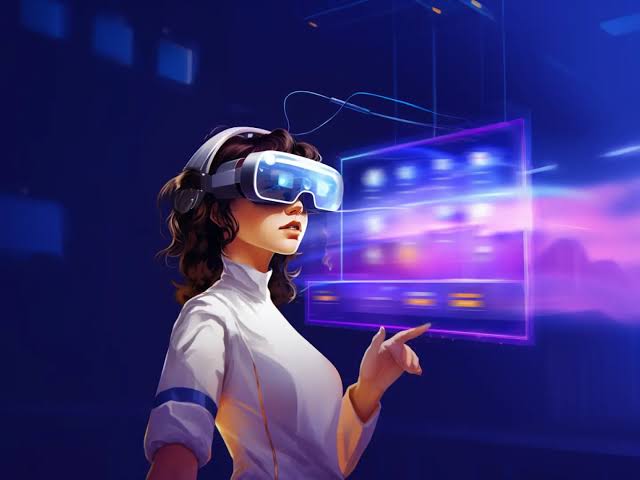
Explore the essentials of designing for Virtual Reality (VR) and Augmented Reality (AR). Learn key considerations for creating immersive and engaging experiences, including user experience design, 3D modeling, immersion, usability, and iterative testing. Discover how to effectively integrate digital content with the real world and design compelling VR and AR environments.
Crafting Engaging Environments, Within Virtual Reality (VR) And Augmented Reality (AR) Contexts.
Introduction
The advancement of technology has introduced experiences that transform our interactions with environments. Virtual Reality (VR) and Augmented Reality (AR) stand out as examples of progressions that have influenced various sectors from gaming and entertainment to education and healthcare. Designing for VR and AR presents a set of challenges and opportunities, in contrast to traditional digital design. This article delves into the considerations and suggested strategies for developing VR and AR experiences.
Understanding VR and AR
Virtual Reality (VR) provides an engaging experience by creating a simulated 3D environment that users can explore using VR headsets and controllers. The goal of VR is to make users feel like they are truly present in a virtual world. Designing VR experiences requires attention to detail to ensure realistic and immersive settings that are easy to navigate and interact with.
On the side Augmented Reality (AR) enhances the real world by overlaying elements. This technology improves how users perceive their surroundings through devices like smartphones, tablets or AR glasses. AR combines digital content with environments offering information or interactive features. When designing AR experiences it's important to integrate content into the world without overwhelming or confusing users.
Key Considerations in VR and AR Design
1. User Experience (UX) And Interaction Design
When it comes to developing Reality (VR) And Augmented Reality (AR) The focus is on creating user experiences that are enjoyable and easy to use. In VR designers need to consider how users will navigate and engage within the virtual space. This requires crafting controls and interactions that feel immersive and user friendly. Its important to design elements such as movement, object manipulation and feedback systems to minimize discomfort and motion sickness commonly associated with VR.
For AR the design focus is on seamlessly integrating components into the real world. Ensuring that virtual objects blend into the environment and that interactions are smooth is essential. Designers must consider aspects like awareness, object size and contextual relevance to ensure that AR elements enhance the real world experience rather than detract from it.
2. 3D Modeling and Environment Design
In the realm of reality (VR) the creation of three dimensional models and environments plays a role in the design process. It requires crafting and optimizing these elements to provide an immersive and realistic experience. Attention to details such as textures, lighting and spatial configurations is crucial for constructing a believable virtual setting. Designers must also prioritize the performance of the VR application by fine tuning models and settings to prevent lags and ensure a smooth user experience.
Conversely in the world of reality (AR) 3D models must be designed to seamlessly interact with objects and their surroundings. This involves considering how elements will look under lighting conditions and in various physical environments. The design process should account for variations in users surroundings to ensure that AR content remains relevant and functional regardless of where it is used.
3. Immersion and Presence
When it comes to designing reality (VR) creating an immersive and believable experience for users is crucial. This involves crafting environments and interactions that truly make users feel like they are in the virtual world. Elements such as sound design, detailed textures and interactive features all play a role in enhancing this sense of immersion. Allowing users to interact with and influence their surroundings further strengthens the feeling of being present, in the space.
Conversely in reality (AR) achieving immersion means seamlessly blending content into the real world. This requires careful design to ensure that elements appear natural and integrate well with the setting. Designers must find a balance between the digital and physical realms ensuring that AR enhancements enrich real world experiences without disrupting users awareness of their surroundings.
4. Usability and Accessibility
When designing virtual reality (VR) and augmented reality (AR) experiences its essential to prioritize usability and accessibility. In VR this means creating interfaces and interactions that are user friendly accommodating users with levels of expertise. It involves providing instructions simplifying interactions and ensuring comfort to prevent issues, like motion sickness.
Conversely in AR usability focuses on ensuring that content is easily comprehensible and seamlessly integrated into the environment. This requires designing intuitive interfaces that adapt well to devices and screen sizes. Moreover incorporating features such as text to speech and adjustable font sizes is crucial to making AR experiences inclusive for all users.
5. Testing and Iteration
Creating virtual reality (VR) and augmented reality (AR) experiences involves thorough testing and fine tuning to enhance user satisfaction. Developing prototypes and conducting user tests are key steps in pinpointing issues and gathering feedback on the effectiveness of the designs. The design process allows designers to make adjustments based on insights and real world usage improving the quality and impact of the experience.
In VR testing should focus on aspects such, as comfort, usability and immersion. Meanwhile AR testing should evaluate how well digital content is integrated and how users interact with it in situations. Continuous refinement is crucial for both VR and AR designs to ensure that the final product meets user expectations and provides a smooth engaging experience.
Conclusion
Designing for Virtual Reality (VR) and Augmented Reality (AR) presents a unique set of challenges and opportunities when compared to traditional digital design. To create impactful and captivating VR and AR environments designers should focus on elements like user experience, interaction design, 3D modeling, immersion, usability and thorough testing. As technology evolves understanding and implementing these design principles will be crucial in crafting experiences that not grab users attention but also enhance their engagement with the content.